Mayor Bass says affordable housing is thriving, the numbers say otherwise


(Image generated with MidJourney)
In her State of the City address this month, Los Angeles Mayor Karen Bass boasted that her administration had fast-tracked the construction of more than 30,000 affordable housing units.
A Crosstown analysis of the data indicates that the pace of actual building may be considerably slower. Bass’s Executive Directive 1 was supposed to slash red tape and accelerate approval times for housing projects that consist entirely of affordable, or below market rate, units. She said builders had already broken ground on 6,000 of them.
Of the 32,838 units plan-approved under ED1 through the end of last year and listed on the case summary dashboard, only 4,993 have been issued building permits for new construction, a Crosstown analysis found.
Just 26% of affordable units entitled during ED1’s first year, 2023, have been granted building permits, all of which have been approved for two years or more.
“Mayor Bass was correct in her statement that 6,000 units are currently under construction,” the mayor’s press office said in a statement to Crosstown. The mayor’s office did not provide a clear explanation as to how that total was calculated.
The slower-than-advertised pace of affordable units is just one part of a broader stagnation afflicting the city’s home-building sector. Last year, a total of 7,892 apartment units were permitted, according to data from the Department of Building and Safety. That includes everything from affordable units to luxury apartments. It represents a 1% increase from the year prior, but a 34% decrease from 2019.
Los Angeles faces an acute housing shortage, a problem that has exacerbated a longstanding homelessness crisis and has contributed to rising unaffordability that burdens many of the city’s residents. According to the Southern California Association of Governments, the city of Los Angeles must produce 456,643 housing units during the decade, a pace it now appears certain to miss by a wide margin.
Despite the chronic need for more housing, builders say they are up against an array of obstacles in Los Angeles. Production costs are more than double the average costs in Texas, according to a RAND study. The controversial Measure ULA, informally known as the ”mansion tax,” has also been blamed for construction slowdowns. The levy, which went into effect in April of 2023, adds a 4% tax on residential and commercial properties sold for $5.3 million or more, and a 5.5% tax on properties sold for over $10.6 million, including apartment blocks. The revenues are intended to be put toward affordable housing. But the extra tax makes building an apartment project and then selling it particularly burdensome.
Ari Kahan, principal of California Landmark Group, said his development firm has significantly scaled back their Los Angeles projects.
“We still explore unique opportunities, but we cannot afford the risk of both ULA and the inevitable other shoe dropping on another related issue in the city of L.A.,” Kahan said.
The city’s housing crisis has been at the forefront of Bass’s first term agenda. ED 1, which went into effect in 2023, was intended to fast-track construction by reducing approval times for affordable housing projects and shelters to 60 days. The directive prompted a flurry of new proposals. But moving those proposals from the drawing board to actual construction has been slow.
Get data and news about your Los Angeles neighborhood with the Crosstown Neighborhood Newsletter
Building struggles
ED1 and programs that encouraged affordable housing, such as bonus diversity programs and the Transit Oriented Communities Incentive Program — which incentivizes low-income housing near bus and train stations — have been big enticements for new development. However, Kahan said Measure ULA has made it difficult for developers to turn a profit on those projects, and he predicts that most of them will never be built.
The measure has generated over $1 billion through January 2026. Critics assail the nickname “mansion tax” because the levy equally applies to multifamily apartment buildings and commercial properties, not just expensive single-family homes. Fifty-nine percent of transactions are single-family residences, 25% are commercial properties and 13% are multi-family residences, according to the ULA Revenue Dashboard.
Joe Donlin, director of United to House LA, the coalition of housing, labor and renters groups behind the measure, defended the tax and said it’s important to let the policy “breathe and take effect” to understand its full impact. He called the measure an economic engine for the city, adding that $400 million in ULA revenue went out to affordable housing developers last fall.
“We’re talking about hundreds of new homes being built, thousands of new construction jobs, investment in neighborhoods that haven’t seen investment like this in a long time,” Donlin said.
Donlin said Los Angeles’s housing struggles are likely due to stubbornly high interest rates, insurance costs and construction material costs around the time Measure ULA went into effect.
Stephanie Klasky-Gamer, president of LA Family Housing, said she has been able to sidestep Measure ULA because she manages the properties she builds instead of selling them. For her, one of the biggest affordable housing hurdles is a lack of federal assistance to help low income tenants pay rent.
“[Los Angeles’s] largest housing gap is for our extremely and very low income households. In order to make housing affordable to that target income group, it would require a larger allocation of rental subsidies,” Klasky-Gamer said.
President Donald Trump’s 2026 budget proposal aimed to cut over $26 billion from federal rental assistance programs, but the House Appropriations Committee rejected the cuts and increased funding for housing assistance programs. Tenant-based vouchers received $2.4 billion more than they did in the 2025 fiscal year, and the project-based rental assistance program received an extra $1.65 billion.
Westchester grows, Downtown dwindles
In a rocky year for issued apartment permits, some Los Angeles neighborhoods showed marked increases, while others saw steep declines.
Westchester had 787 apartment units permitted last year, the most of any neighborhood. North Hollywood had the second most, at 502, and Mid-City had the third most with 449.
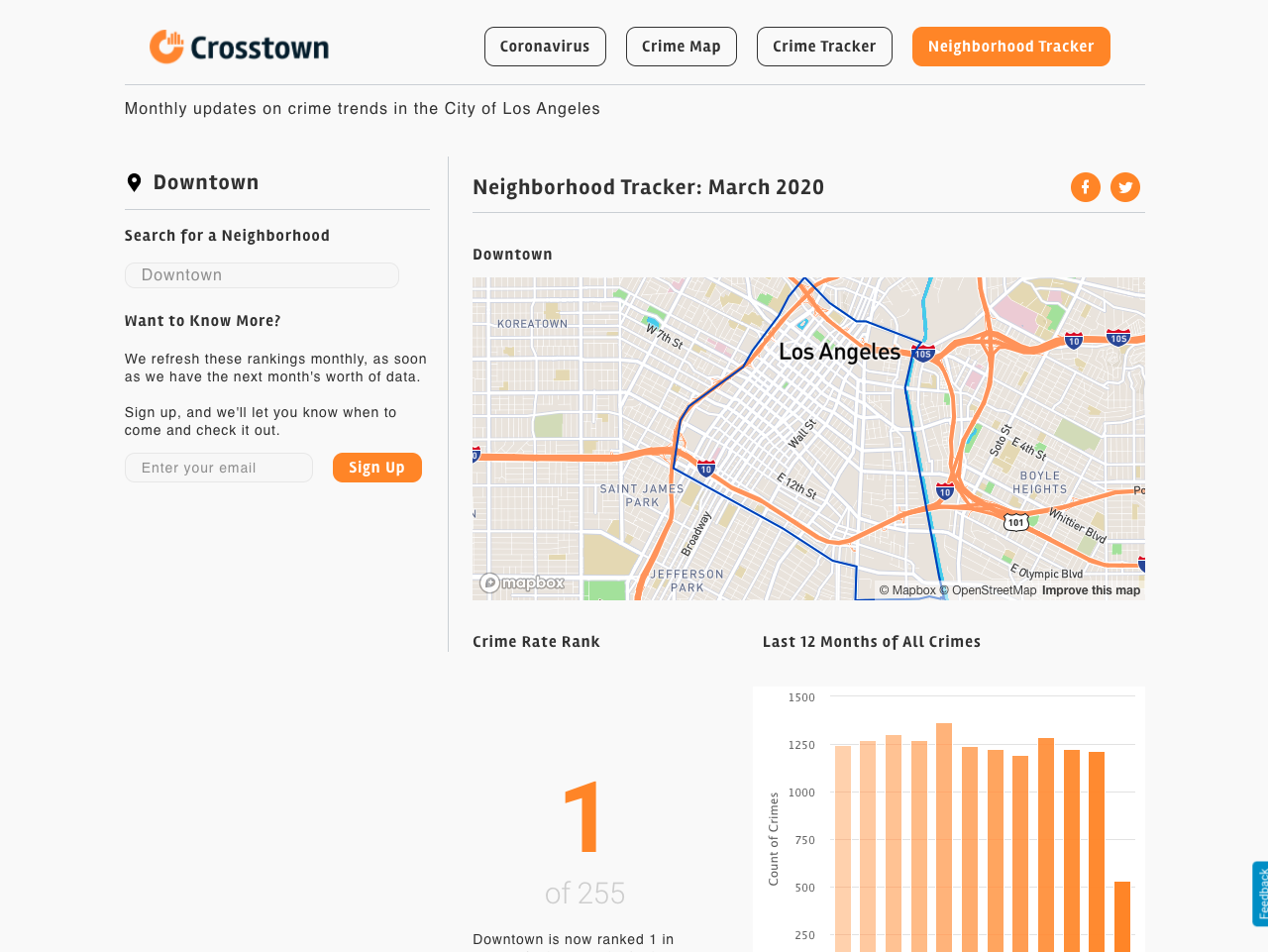
Downtown saw a substantial dip in permits issued. Last year, 207 units were approved, nearly half as many as the year before, and an 87% decrease from 2022.
The regression comes as Downtown contends with a massive homelessness population. Downtown had the most non-emergency calls for homeless encampments, 8,417, than any other neighborhood in 2025, according to MyLA311 service data.
How we did it: We examined all ED1-related projects on the city’s case summary dashboard and compared those with the Department of Building and Safety’s permits issued for new apartments. In addition, we compiled the number of apartment new units permitted for construction in the city over the past decade. In a previous article, Crosstown used a slightly different methodology to determine the number of permitted apartments in the city. The slight changes in methodology account for the difference in numbers in that article.
Have questions about our data? Write to us at askus@xtown.la