L.A.’s trees are facing a 911-style emergency


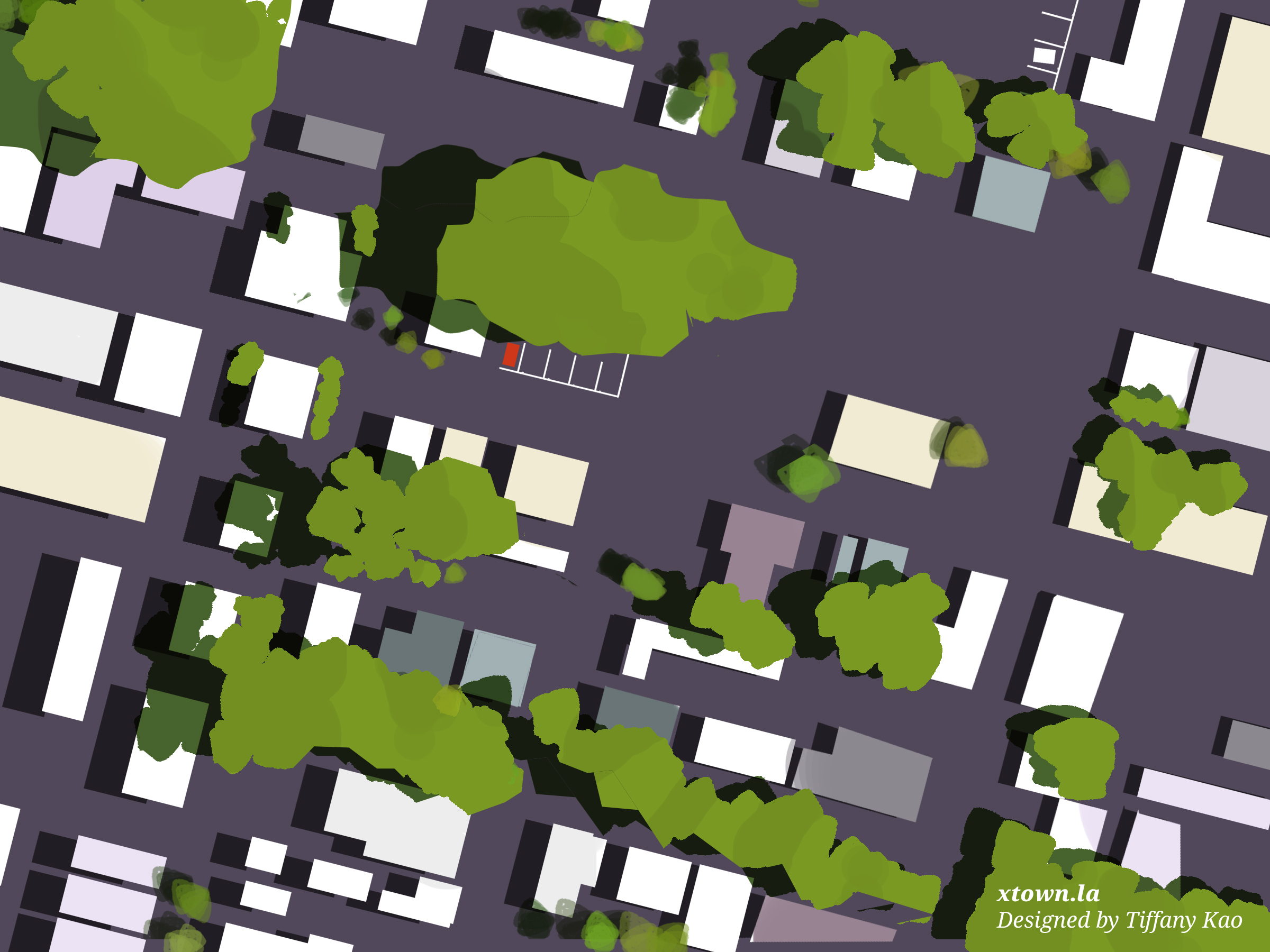
Los Angeles’s trees are in increasingly dire health, according to one measure, weakened by climate, poor planning and a city stretched too thin to adequately care for them.
The number of “tree emergencies” reported to the city’s MyLA311 service has been climbing steadily, reaching 1,844 in December, the highest level recorded since the city began releasing data last April. A tree emergency, by the city’s own classification, typically means a tree has fallen or is at imminent risk of doing so. A Crosstown analysis shows that the increase is not isolated to just some parts of the city, but is more or less consistent across all neighborhoods.
The sudden rise – propelled by recent rains – is an illustration of what arborists have been warning about for some time: Los Angeles is failing to properly care for its urban tree canopy, pushing once healthy trees to the point of failure. They expect conditions to get worse, exacerbated by a lack of regular maintenance and increasing stresses brought on by hotter temperatures and intense storms.
The various city agencies in charge of maintaining trees are so underfunded that they “are not able to walk and chew gum at the same time,” says Aaron Thomas, the urban forestry director at North East Trees, an environmental advocacy organization. The lack of adequate care only accelerates that decline. “It’s a vicious cycle, young trees that need structural pruning that will prevent issues in the future don’t get care. Trees that are just not healthy because they are not being cared for become hazardous.”
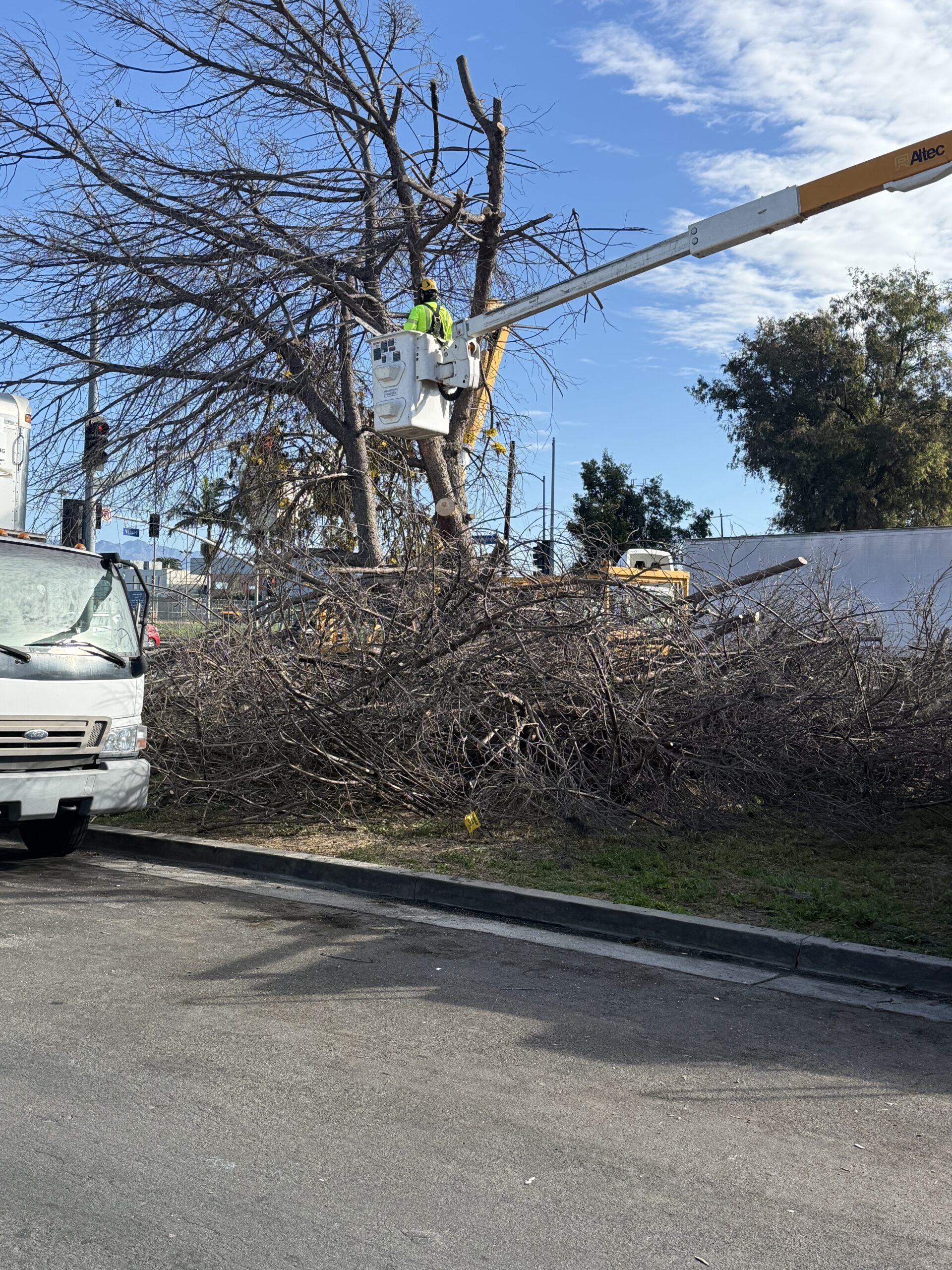
Workers respond to a tree emergency on Venice Blvd. (Photo: Gabriel Kahn)
Once every 17 years
There are approximately 660,000 trees that make up the city of Los Angeles’s urban tree canopy, one of the largest in the nation. Keeping them healthy requires attention at every stage. A young tree that does not receive early pruning grows unevenly and eventually becomes a hazard. Without that investment, the city ends up spending more money later on bigger, more dangerous trees.
A representative for the city’s Bureau of Street Services, which houses the Urban Forestry Division, said that despite the city’s recent budget woes, staffing has remained more or less consistent, with about 220 workers. That allows the division to operate on a 17-year maintenance cycle.
That 17-year interval is far longer than what arborists recommend, according to Esther Margulies, a landscape architect and urban planning professor at the University of Southern California. “The more you defer maintenance, the more expensive and difficult it becomes,” she said, “because you’re dealing with bigger trees and more structural problems.”
Recent patterns of intense rainfall followed by high winds have made conditions worse, and have likely pushed up the number of tree emergency calls. Saturated soil loses its grip, and trees that might have held come down.
Margulies described the situation as an infrastructure problem. Trees provide shade, stormwater absorption, and cooling in a city that faces more extreme heat every year. “None of that happens for free,” she said, “just like other infrastructure in our city.”
New trees needed for a new climate
Bryan Vejar is the associate director of community forestry at TreePeople, an organization that helps maintain the local tree canopy, among other things. The city’s Urban Forestry Division is “so undercapacity, their priorities are responding to tree mortality and hazards, not planting.”
Part of what is occurring now is the consequence of bad decisions made years earlier. Trees planted across the city were chosen for their looks rather than their ability to survive in Los Angeles’s evolving climate. Only 10-15% of them are native to Southern California, says Vejar. Species selected for fall color or flowering, popular in wetter climates, were never suited for prolonged drought or rising heat. Many are now approaching the end of their lifespans. Vejar noted that Los Angeles street trees survive on average between eight and 25 years, even though many of the species planted are capable of living hundreds of years under the right conditions.
Simply planting more trees won’t fix the problem. “Once you plant it, as a minimum, you have to care, water for three years,” says Vejar. “We can’t plant ourselves out of tree mortality.”
Trees need to be capable of surviving in compacted soil that is often poor quality. “These different pressures winnow down the inherent tree palette. Climate change makes it harder,” says Vejar. He added that in some cases, even native tree species are no longer adequate. “Sometimes, we have to plant for a climate that is hotter, drier. We can’t plant native trees, but ones that can survive in that new climate.”
How we did it: We analyzed 10 months of MyLA311 data for tree-related services requests and also broke down the data by neighborhood.
Have questions about our data? Write to us at askus@xtown.la.